
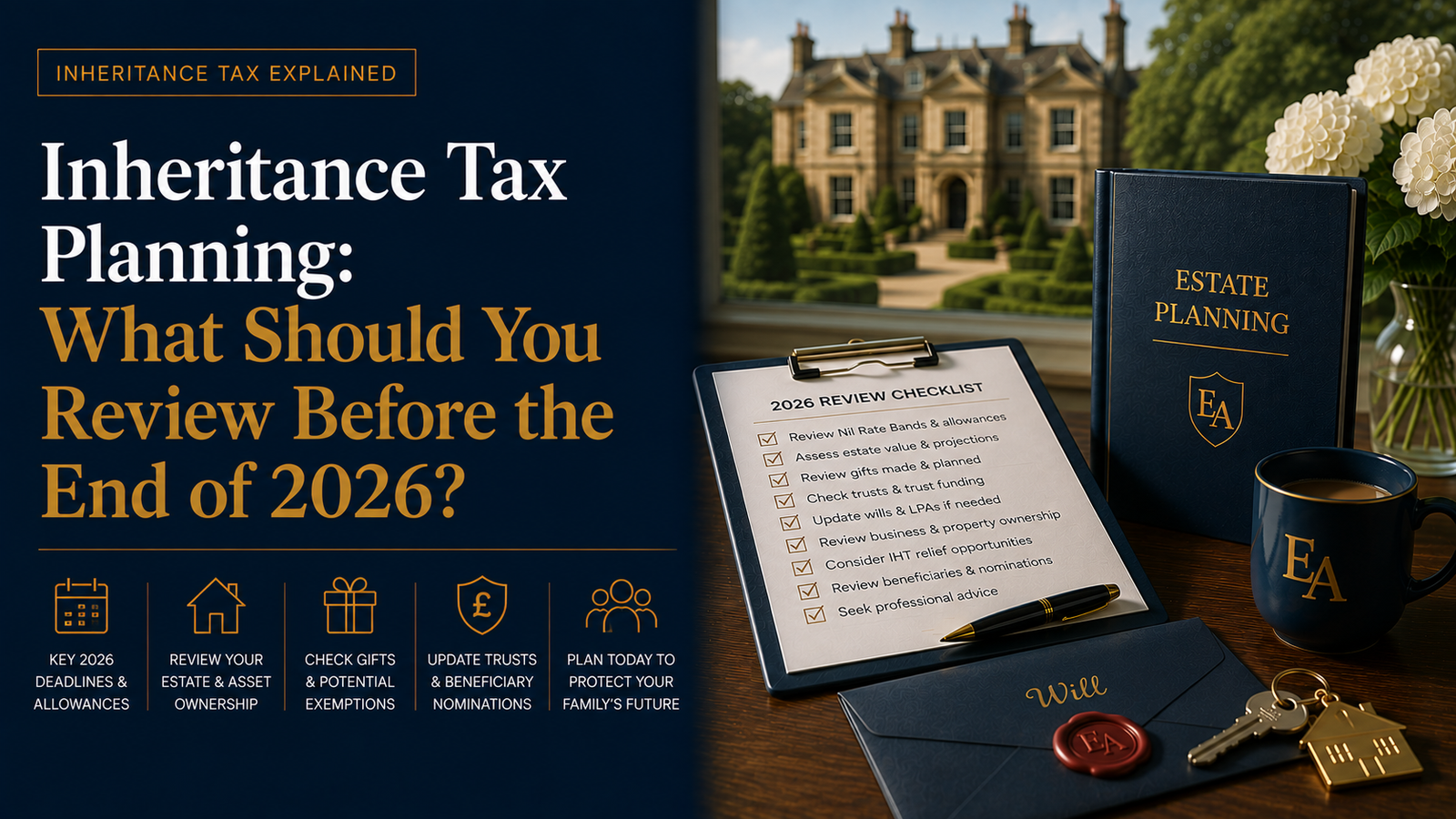
Inheritance tax planning is rarely something that should be reviewed once and then forgotten.
As your property, pensions, investments and family circumstances change, the way your estate is structured can change with them. What may have been appropriate several years ago may no longer reflect the value or composition of your estate today.
With 2027 approaching, there are several areas UK families may want to review before the end of the year.
1. Has the Value of Your Estate Increased?
One of the simplest places to start is by calculating the approximate value of your estate today.
This may include:
- Your main residence and other property
- Cash and savings
- ISAs and investment portfolios
- Business interests
- Personal possessions and other valuable assets
- Pensions where relevant to the estate
Property and investment growth can mean an estate becomes significantly larger over time, even where no major changes have been made by the family.
An estate that was comfortably within available inheritance tax allowances several years ago may therefore be in a very different position today.
2. Are Your Will and Estate Arrangements Still Appropriate?
A Will is an important part of estate planning, but it should reflect your current circumstances.
Consider whether anything significant has changed since your Will was prepared. This might include marriage, divorce, the birth of children or grandchildren, changes in property ownership, the sale of a business or substantial changes in wealth.
It is also worth checking that the people appointed as executors are still appropriate and understand the responsibilities they may eventually have.
3. Review Your Pension Arrangements
Pensions are becoming an increasingly important part of estate planning.
The treatment of unused pension funds for inheritance tax purposes is due to change from April 2027. Families with significant defined contribution pensions may therefore want to understand how the proposed rules could affect their wider estate.
This does not necessarily mean making immediate changes. It means understanding how your pension fits alongside your property, investments and other assets before making decisions.
4. Check Previous Gifts and Keep Good Records
If you have made substantial gifts to children or other family members, maintaining clear records can be important.
Records might include the date of the gift, its value, who received it and where the money came from.
Good documentation can make the eventual administration of an estate considerably easier and help executors understand what happened during your lifetime.
5. Look at Your Property Ownership
For many UK families, property represents the largest individual component of their estate.
It is worth understanding how your property is owned, what it is currently worth and how ownership interacts with your Will and wider estate arrangements.
Families with estates around or above £2 million should also understand the Residence Nil Rate Band taper and whether growth in the estate could affect the allowances potentially available.
6. Check Your Beneficiary Nominations and Policies
Estate planning involves more than your Will.
Pension nominations, life insurance arrangements and other beneficiary instructions should also be reviewed periodically.
Old nominations can sometimes remain in place for many years despite significant changes in family circumstances.
7. Consider How Everything Works Together
One of the most important questions is not simply whether you have a Will, pension, investments or existing estate planning arrangements.
It is whether all of those components work together.
An estate may contain individually sensible arrangements but still have gaps when property ownership, pensions, investments, tax allowances, beneficiaries and succession plans are considered together.
Before the End of 2026
A useful year-end estate review does not have to begin with complex planning.
Start by establishing what you own, approximately what it is worth, how it is structured and what would happen if your estate had to be administered today.
That provides a much clearer foundation for deciding whether anything requires further attention.
Educational Notice: This article is provided for general educational purposes only and does not constitute financial, investment, tax or legal advice. Tax legislation and individual circumstances can change. Appropriate professional advice should be obtained before making financial, tax or estate planning decisions.